May 18, 2013

Holistic Approach for Fibromyalgia


Article from http://www.wholesomeone.com/condition/fibromyalgia
What is Fibromyalgia?
Fibromyalgia is a syndrome that overall is characterized by diffuse pain and overwhelming fatigue that can be debilitating. There are several characteristics of the fibromyalgia syndrome (FMS). They can include:
  • Significant joint and muscle pain. Health professionals have identified “trigger points” that are present throughout the body that can elicit pain in particular areas when mild pressure is applied. The affected person with FMS can complain of pain all over the body.
  • Significant fatigue, especially with moderate physical exertion. Some people report requiring days to recover from what some may consider to be only mild physical exertion.
  • The person can complain of being unable to get a good night’s sleep.
  • The person may complain of frequent headaches and may also suffer from depression
  • Recurrent abdominal pain, diarrhea and/or constipation which may be due to associated Irritable Bowel Syndrome (IBS)


What causes Fibromyalgia Syndrome (FMS)?

The specific cause of fibromyalgia is not known; however, the development of FMS has been typically thought to occur after a significant “stressor.” The stressor may involve a recent illness, including any recent physical or psychological trauma. For some people, the stressor can be as simple as taking an antibiotic that can alter the bowel flora and precipitate a flare of FMS. The role of Candida overgrowth needs to be considered as a significant contributor to the development of FMS.
There has been a lot of research done on the pain receptors in the body. These receptors may do more than just modulate pain; they may also have a role in the development of FMS but also autoimmune diseases/rheumatologic syndromes. 


Is Fibromyalgia Syndrome an autoimmune condition?

No, Fibromyalgia Syndrome is NOT an autoimmune condition. Note, however, that FMS may occur on its own but can also occur in the presence of other autoimmune diseases. 


What other medical conditions are associated with FMS?

Fibromyalgia can be strongly associated with many other conditions. They can include:
  • Rheumatoid Arthritis (RA)
  • Systemic Lupus Erythematosus
  • Adrenal Fatigue (There is a very close relationship with this condition)
  • Gastroesophageal Reflux Disease  (GERD)
  • Irritable Bowel Syndrome (IBS)
  • Interstitial cystitis (IC)


What are the conventional treatments for FMS?

The conventional treatments for FMS involve trying to lessen the pain and disability associated with this condition. Commonly prescribed medications include:
Pregabalin (Lyrica): This medication works by treating nerve and/or muscle pain and is indicated by the FDA for the treatment of FMS. This medication is usually dosed 75 mg twice a day with dose adjustments needing to be made if kidney disease is present. 
  • Side effects can include lethargy, weakness, swelling and allergic reactions.
Duloxetine (Cymbalta): This is a medication also used for the treatment of pain, including nerve pain. It has been used in the treatment of depression as well. 
  • Potential side effects can include drowsiness, easy bruising, decreased appetite and/or constipation.
Tricyclic antidepressants have also been used in the treatment of not only pain but also of depression.  Other antidepressants, including Fluoxetine (Prozac) and Sertraline (Zoloft), have also been studied not only for the treatment of depression but also for pain with fibromyalgia. 
  • The medications can have what is called “anticholinergic” side effects which can include dry mouth, constipation, and urinary retention.


Developing a Holistic Treatment Plan for Fibromyalgia Syndrome (FMS)

The treatment of Fibromyalgia Syndrome (FMS) involves an integrative treatment plan that involves treating mind, body, and spirit. Only using  prescription medications is simply not enough for the treatment of this condition. The treatment plan includes correcting nutrient deficiencies, treating pain and inflammation, searching for underlying causes of FMS, evaluating for hormonal imbalance, as well as treating the person so she can get a good night’s rest.


Getting a Holistic Based Evaluation

If you have fibromyalgia syndrome (FMS), you need a detailed and personalized evaluation. This means looking for and identifying any causes of inflammation and potential infections, including Lyme disease. In addition, you should ask your healthcare provider about the following:
  • Hormonal Analysis: Fibromyalgia can be associated with many hormonal imbalances, including decreased levels of the hormones by the adrenal gland (adrenal fatigue). These can include sex hormones. Low hormone levels can also contribute to fatigue and insomnia among others. 
  • The testing mentioned above is a combination of blood, urine, and saliva testing.
  • Testing for nutrient deficiencies and toxicities: There are some personalized profiles, including hair analysis that should be considered.


Nutritional Recommendations

Forming a solid nutritional plan is vital as those with FMS may be nutrient-depleted. The pain can be so debilitating that one may not feel like eating. It can be very difficult to eat three meals a day. If the food that one is eating is low in nutritional value and is high in Omega 6 content, this can promote further inflammation and pain. Without proper nutrition, your body will not be able to heal. Modifying your diet and supplementation of the correct nutrient deficiencies are key in the treatment of FMS. Your diet should have high antioxidant and high nutritional value. 
 
Anti-Inflammatory Diet
Juicing for Fibromyalgia
A diet that is plant-based in nature and emphasizes fruits and vegetables and whole grains is necessary in the treatment of fibromyalgia. You want to as much as possible eliminate refined foods from your diet. Be aware of any food sensitivities that you may have that can exacerbate underlying inflammation and pain. Any food has the ability to stimulate an inflammatory response. One of the most common examples of this is gluten in celiac disease. On an anti-inflammatory diet, all possible sources of food sensitivities are eliminated and then reintroduced one at a time.
  • Another way is to have your blood tested for food sensitivities.
  • Be aware that different foods, even among fruits and vegetables, can have different degrees of inflammation. There is a great site at www.nutritiondata.comthat has an  inflammatory index that can tell you the inflammatory power of the foods that you are eating. You want to focus on foods that have a high anti-inflammatory index.
Other Nutritional Recommendations:
  • Stay away from sugar: Sugar can be a potent source of inflammation. Eliminate this from your diet, and you can see a change in how you feel as well.  Sugar can also promote Candida overgrowth in the intestine which stimulates an inflammatory response via mycotoxins.
  • Juicing in the morning is a great way to start the morning and get a great anti-oxidant kick to start your day.

Promoting Intestinal Health:

You read about the connection between Irritable Bowel Syndrome (IBS) and Fibromyalgia Syndrome (FMS). Maintaining a healthy intestinal tract reduces total body inflammation and is very important in the treatment of FMS. This aspect in the treatment of FMS is not emphasized enough. The microflora of the intestinal tract plays such an important role in the modulation of the immune system. Altered gut flora can play a major role in your ability to absorb nutrients, and it can contribute to fungal overgrowth. 
 
Supplements for Fibromyalgia
Probiotics: These should be a mainstay in any inflammatory condition. They can normalize the bowel flora and replace the bad bacteria with the good intestinal microflora. Studies specific to their benefits in FMS have been mixed, but they do have an effect on immune system modulation and are often included in any anti-inflammatory regimen. In one review article from the Journal of Clinical Gastroenterology, the use of probiotics provided adequate relief in the treatment of diarrhea-predominant IBS.
 
Digestive enzymes: Consider the use digestive enzymes to help digest food completely which helps in absorption. The ability to maximally absorb nutrients can be affected in those with chronic inflammation. 
 
Fiber: Don’t forget the importance of including fiber in your nutrition program. Not only is it  vital for overall bowel health but it can also “bind up” toxins in the intestine and help eliminate them from the body.


Supplementing Naturally

There are different supplements that have a role in the treatment of Fibromyalgia Syndrome. Supplements can help increase energy to the cell and the body, reduce pain and inflammation, help you get a good night’s sleep, and provide nutritional value. 
 

Supplements that Boost Energy to the Cell

D-ribose: There are studies concerning fibromyalgia that tout the energy boost of D-ribose. D-ribose increases the energy to all of the cells of the body, especially the muscle cells. Supplementing with D-ribose can provide your heart with the energy boost that it needs.  
  • D-ribose commonly comes in capsule or powdered form. The powdered form is preferred as you can add it to your morning drink.
  • The recommended starting dose is 2500 mg. Increase by 2500 mg every few weeks to reach a maximum dose of 10,000 mg. 
  • Even though ribose is a “sugar” it will not raise blood glucose levels. Higher doses than 10,000 mg can cause diarrheal symptoms in some people. 
 
Coenzyme Q10 (Ubiquinone): Replacement of this antioxidant can help improve fibromyalgia symptoms. It has been reported that those with fibromyalgia as well as other chronic illnesses can have lower than normal levels of ubiquinone in the body. 
  • Begin with low doses at 50-100 mg daily and increase to twice a day after several weeks. Smaller doses taken during the day maximizes its absorption. 
  • As ubiquinone can lower blood pressure, you need to closely monitor your blood pressure. If you have diabetes, monitor your blood glucose levels as ubiquinone can lower blood glucose levels as well.  

Supplements that Help Boost Nutrition:

Magnesium: The role of low magnesium levels in the body and its importance in inflammation, pain, and fatigue is being researched. In one review article, the authors noted lower levels of zinc and magnesium than in the control groups. Magnesium supplementation is necessary to help counteract the fatigue and pain associated with fibromyalgia. Certain medications, such as diuretics, can lower your magnesium levels. There are several ways to increase your magnesium intake:
  • Increase the amount of leafy green vegetables, seeds (sunflower and sesame for example) and nuts (almonds and Brazil nuts for example) which contain a lot of magnesium. You should strive to at least consume 600-800 mg a day. 
  • If needed, magnesium can also be supplemented either orally or in a gel or oil formulation applied directly to the skin. Chelated magnesium is a form of magnesium taken orally without the heavy metals. This can be started once a day and increased to twice a day for a total dose of 400-600 mg. Note that very high doses of magnesium can cause diarrhea. Magnesium Malate is a form of magnesium that is very well absorbed.
  • An alternative is to apply Magnesium gel or oil to your skin once or twice daily. If you have been told that you have kidney problems, you may need to have blood levels of your magnesium level followed and limit your magnesium intake.
Vitamins for Fibromyalgia
Vitamin D: The role of Vitamin D deficiency in the development of fibromyalgia is being evaluated; however, in one research article it was noted that in evaluating over seventy-five patients who had been diagnosed with fibromyalgia, over two-thirds had low or low-normal Vitamin D levels. The authors of this study also noted that occurred very frequently in those patients with depression and anxiety. Don’t forget that Vitamin D supplementation is vital for your overall bone and muscle health. 
  • Ask your healthcare provider to measure a Vitamin D level, which is a simple blood test.
  • Begin Vitamin D3 at 1000 Units daily with food. Because it is a fat soluble vitamin, it is better absorbed with food. 
Vitamin C: Remember that Vitamin C is an antioxidant; in terms of cellular health, because it is an electron donor, it helps to reduce oxidative stress and keep the cells in a reduced or natural state. We think that supplementation with Vitamin C may be beneficial. In one small study, 12 individuals with fibromyalgia were given a combination of 100 mg of Vitamin C and broccoli powder. They were closely followed over a period of one month. By the end of the month the participants in the trial reported an improved quality of life and reduced sensitivity to pain. Deficiency of this vitamin can directly impact adrenal health, and FMS can cause a lot of stress on the adrenal glands and is strongly associated with the development of adrenal fatigue, which is strongly associated with Fibromyalgia Syndrome. 
  • The ester form of Vitamin C is better absorbed than other formulations.
  • Vitamin C at a dose of 2000 mg a day is a good starting dose.

Supplements that Relieve Pain and Inflammation:

Bioflavonoids: Good antioxidant support is vital in the treatment of Fibromyalgia. Bioflavonoids are excellent antioxidants that can relieve pain and inflammation. Bioflavonoids that have been studied in the treatment of fibromyalgia include turmeric and quercetin. Quercetin may be especially effective as it has antioxidant, anti-inflammatory and anti-allergenic properties.
  • Turmeric can be taken as a 400 mg capsule daily or as a powder that can be sprinkled on each meal.
  • Quercetin can be taken as a capsule. Usual starting dose is 500 mg a day.
Wobenzym N: This is an enzyme supplement that is used in the treatment of inflammation and pain. Enzymes in this supplement include bromelain (from pineapple) and papain (from papaya). 
  • If you have allergies to pineapples or papaya, do not take this supplement.
  • It is best taken on an empty stomach; be aware that you may need to take 6-12 tablets a day for an inflammatory response.
Morinda citrifolia (Noni): This is a tropical plant from East Asia that has been used for many years. It has anti-inflammatory properties and can help in the treatment of pain. 
  • Noni can come in capsule or juice form. If you take the juice form, begin at 1 ounce twice a day and increase slowly to 4-6 oz a day.
  • Some forms of Noni can have a high potassium content so if you have kidney disease you need to be mindful of this.
  • Extremely high doses of this may have an adverse effect on the liver, although this is controversial. The several ounces a day that we mention here is very low dosage of this supplement. 

Supplements That Can Help You Get a Good Night’s Sleep:

Melatonin: Melatonin is a natural hormone that is helpful in helping you achieve a good night’s sleep. In those with FMS, one research article points out that melatonin levels are lower at night when sleeping compared to someone who does not have fibromyalgia. Supplementation with melatonin may also help pain in addition to improving the quality of sleep. 
  • Start at low doses of 1-2 mg each night before going to sleep each night and increase slowly. 
Valerian root: This is an herb that can help you get a good night’s rest. There have been several studies examining the efficacy of valerian root in the treatment of insomnia. In one review, the authors concluded that while further study was needed, valerian root seemed to able to improve the quality of sleep without experiencing any significant side effects. 


Carefully Developing an Exercise Program

Yoga for Fibromyalgia
You need to be very careful when designing an exercise program. Strenuous activity and/or high intensity exercise can actually be counterproductive in someone with fibromyalgia. This does not mean that you will not be able to tolerate any and all exercise regimens. It means that you need to be careful, start slowly, and find out what your own limits are and increase very slowly and carefully. Meditative-based exercises can be very beneficial for someone with fibromyalgia.
  • Yoga: Yoga is a great way to increase muscle endurance and flexibility. It is important to start slowly and work with a certified instructor to learn the right way to do each exercise. Yoga is especially effective if started in the early stages of this condition.
  • Tai chi is another great meditative-based exercise that should be incorporated into your regimen.
  • Muscle Resistance Training: Whether you are using free weights or machines, you need to start with very low weight and lower repetitions. You need to know your limits. A good rule of thumb is to exercise until you begin to experience mild fatigue, but don’t push beyond that point. If you do, again, it can be counterproductive and you can feel worse the next day.
  • In addition to the exercise regimen mentioned above, you should also consider seeing someone who is holistically trained in helping you regain more function and flexibility. This can include seeing a structural integration specialistchiropractor, and/or specialist in osteopathic manipulation. In general, gentle myofasical/massage techniques are preferred as again you may not be able to tolerate a deep massage.


Being Mindful and Spiritual

Tai Chi for Fibromyalgia
An important aspect of healing with fibromyalgia is recognizing the connection between mind, body and spirit. The mental and emotional aspects of treatment cannot be ignored. 
  • Daily meditation is vital to calm the mind and body.
  • Daily prayer can help relax the mind and body.
  • FMS is often associated with trauma, especially emotional trauma. Helping one to recover from emotional trauma is essential to recovery. Talking with a counselor or advisor can be very helpful.
  • The role of family and friend support cannot be emphasized enough.


References 

  • Armstrong DJ, Meenagh GK et al. “Vitamin D deficiency is associated with anxiety and depression in fibromyalgia.” Clinical Rheumatology. 2007 Apr;26(4):551-4.

April 6, 2013

3rd Annual Earth Day event: Making Your House a Homestead

We just celebrated our third annual annual Earth Day event. The 2013 theme was "Making Your House a Homestead" and was at my House--Harvest Haven. And this year it was a family event! Though the rain threatened, we still had a great turnout.

------
FOOD STORAGE/EMERGENCY PREP 101
We started at my house and while we waited for everyone to arrive, we talked food storage 101 and handed out a survey on general emergency preparedness, so people could see where they were at. On that handout was also 12 steps from BeReadyUtah.org for ideas to get started--awesome FHE ideas for emergency prep. We also had a list of recommended food storage amounts for one adult in basic staples (grains, beans, oils/fats, sweeteners, etc. and an example of mine downstairs.


Paul showed them his newly built shelves in our cold storage. This was just a short intro and a few steps for those interested. And we talked a little about the variety of grains too, besides just wheat and oats.

BACKYARD PETS 101: Bees and Chickens

Jared shows us his chicken coop and talks about the ins and outs of owning chickens. Then he talks about bees 101--super interesting! I know a lot of the men came to hear that.
Jared's cute wife Tamara brought out a little honey bear of their real, raw honey for everyone to take home, and a little "honeycomb" treat she made (not real honeycomb, which is beeswax). I swear it tasted just like the British crunchies candy bar!

I interrupted a lot...luckily i had liberty too, right? It was my Earth Day event and the goal was to help people see where and how to start with these things, if they want to take the next step. And I had Paul share his experience with Jared trying to find the new queen bee at our neighbor's house, when the old hive of bees split off and formed a new one across from our house. Paul got to scoop the bees up in his hand and flick them off...so easily, without gloves or a suit or anything. Bees can be so tame and not always as scary as we think--it was quite eye-opening.
Thanks Jared and Tamara for an awesome backyard pets segment of our Earth day!

PRUNING 101
Next, we walked a few houses down to Sahms beautiful backyard retreat! IT was raining, so we didn't stay long and enjoy their playset or bball court. But we saw their 12 fruit tree orchard and Paul gave some pruning tips (he's a good sport to jump in and do random things like this for me, and he likes it too)...which he continued at our house, along the side, while others were filtering back into the house for treats.


Half of the kids stayed in our basement watching a movie or coloring some Earth day coloring pages, while the other half went around to see the bees and chickens (or should I say the playsets and trampolines). :)
Charise's daughter Rachel babysat all the kids who stayed at the house. Thank you!!
But then everyone came back to the house and ate the yummy snacks everyone brought. Chips and blackbean, corn salsa, gluten-free sweet chili rice chips, blue corn chips; rice krispie treats, strawberries dipped in sour cream and brown sugar, cantaloupe, edamame, etc.

And of course, my Earthday jello was forgotten in the fridge. Whoops. But Ethan and I are enjoying it: mixed berry, coconut, lime (inspiration from Mom, who did a July 4th one like that--and yes, the coconut milk and gelatin layer is homemade and healthy--no sugar or artificial ingredients!).

SQUARE FOOT GARDENING 101
At the very end I just gave a short intro I gave in our living room, with a handout on it (as well as composting). A few people were really interested and listened, while everyone else just finished eating. I had a prize, but we ran low on time, so it was awarded to Wendy Hallstrom who showed a great enthusiam for getting her yard and garden together this year...so she will need them: a pair of gardening gloves and packet of Nasturtium seeds to plant those flowers among her vegetables--to help deter bugs (like Marigolds).

If anyone is interested in any of those handouts, just let me know and I can send you the digital copies. I will be getting Jared's Bees and Chicken handouts too.

Stevie took this photo of Ethan... (this is what he would've worn, had it been sunny outside)

So....thanks again for all those troopers who made it out--and in the rain too! IT was a fun, educational morning. And my brother was in town too and good to have him there as well.

Next year will be even greater, so get prepared. :) It might be for families again...and if it's sunny, I already have some great ideas for fun kids earth day activities!

Homemade Lotion Bar

So...I have tried a few homemade lotions and it is hard to get exact measurements when you buy in bulk. So I sometimes don't get the exact consistency for a lotion that I put in a jar. And they frequently look slimy. Not appealing, I know. But...I finally found a homemade version that makes sense! A bar!  I know...lotion as a bar?

Granted...this isn't a good facial lotion because it may clog pores, but I use it on my kids and on my hands and such. I just rub it on my skin and it kind of just glides on perfectly. But even better than that is what I have been looking for in most of my homemade versions of things. The recipe is simple and only needs a few common ingredients--from wellnessmama.com.

If you are going to be making your own bathroom products, these are all items you should have on hand in bulk. Just add them all in equal parts. Here is an example for six thin bars.
-------
1/3 c coconut oil
1/3 c beeswax
1/3 c Shea or cocoa butter (I use Shea, but it is more stinky)
Essential oils (optional: i do about 15 drops. Lavender is the best for children and basic needs and skin healing. Tea trea for cleansing.)

Place the first three oils in a glass jar and put into a pan with water.
Then melt all in the jar.
Once melted, add the essential oils if you chose. And pour...divided into six muffin tin molds.
Let cool, then pop out and enjoy!

--------
You can use a double boiler, but it is messy once done...with all the melted waxy, oily things, so i prefer the glass jar. I did a lavender one for my kids. A lavender, tea tree, peppermint, rosemary one for me. And a spearmint, tea tree, lemon eucalyptus, cedar wood for my hubby (he doesn't generally need lotion, but it is to rub on his chest for sinus and congestion stuff). That is the fun part...mix and mingle the essential oils to your liking for whatever purpose you and your family need. They each can have their own bar. If I were really cool I would add some natural food coloring tints to them each so they looked different....like turmeric or beet juice. But...that is way too much work; and the lotion bars, on the other hand, weren't. So enjoy!

April 1, 2013

Homemade Deodorant


Top 5 Toxic ingredients in you deodorant

Paul and I haven't been using typical store-bought deodorant for a few years now. We didn't like the anti-perspirant and aluminum problems. Our bodies are meant to sweat, and who are we to force it not to? So...we have tried a few natural brand deodorants and the "crystal."

But now...I am happy to share our homemade version that is great and I love the smell!

1/3 c coconut oil
1/3 c arrowroot (this is a cornstarch alt.)
2 T baking soda
10 drops essential oil (we love grapefruit for the smell, but lemon would be antibacterial)

Just use a fork to mix it all together and store in a little glass jar. 
When you want to use it, just dig out a little with your fingers and smear it on under your arms.

Yeah...not the most ideal, but it smells so good and isn't as messy as it sounds. I will keep playing with it, to see if we can get it hard enough to put in a deodorant container to rub on, but until then, this works just fine.

Happy deodorizing (remember, this isn't an anti-perspirant, but it keeps the smell under control)!

February 19, 2013

Fruit Tree Guilds: Sustainable Functional Landscape

Ok, here are more of my notes on Fruit Tree Guilds. So sorry if it's not 100% coherent.

I read a cool book last year about having your own homestead and making your yard functional--ok I read a few. But I can't remember any of them by name, except Gaia's Garden. However, I ran across a fun idea: building an ecosystem for you plants and fruit trees to help sustain each other. This means not just having a vegetable bed or strawberry patch, but putting things together to help balance out each other. So adding comfrey, clover and stawberries and marigolds beneath your apple tree can help every plant take care of eachother. It's companion planting on a large ecosystem scale!

I already posted a little on companion planting, but this is about Fruit tree guild info I've found and hope to implement this summer when I buy a few trees for my less than 1/4 acre. :) And this is also why I'm building a chicken tractor, to help take care of weeds and have a more natural functional garden/part of my yard.

------
 Here's an article I found to help summarize what a guild is and why...

What is a permaculture guild?

A permaculture guild is a carefully assembled selection of plants (and animals), typically gathered around a central plant.
If you don’t like to be restricted, you can choose a central selection of plants, say, fruit trees in a mandala garden.
The supportive plants are selected to enhance the self-sufficiency of the central plant by reducing the work needed to manage it and/or improving its yield.


Why choose to grow plants in guilds?

Each plant needs at least 4 things: Nutrients (mainly Nitrogen), Mulch, Pollination, Protection (from pests and competition). It’s only natural that each plant we choose should not only serve as food, but also provide a surplus of at least one service to the guild. Some, like comfrey, provide many.
Here's an example...

The main benefits of permaculture guilds

1. Easy picking

Plants that love to grow together often complement in taste, too. Dill, grown under apple trees provides a habitat for predatory wasps and also tastes great with apples.
Marigolds, grown with cucumbers deter nematodes. They also make for a nice salad together.

2. Source of nutrients

Nitrogen fixing plants (clover, lucerne, lupinus and other legumes) transform nitrogen from the atmosphere into ammonia, the source of nitrogen that is readily available for other plants to use. Nitrogen is the main nutrient that plants use.
Animals help to fertilize the soil as well. A chicken tractor is one example.

3. Act as mulch

Many plants that grow low to the ground can be used as a living mulch. They retain moisture in the soil, prevent soil erosion, deter weeds and generally have all kinds of benefits. Excellent examples are clover (which also fixes nitrogen and thus can be used as a green manure), spinach, strawberries, …
Additionally, every plant that sheds its’ leaves in the autumn also contributes to the mulch.

4. Provide shelter from extreme weather conditions

Nitrogen fixing trees, such as tagasaste or acacia, interplanted with fruit trees, not only provide the nutrients and mulch, but also reduce frost dangers and provide shade for sensitive trees (like citrus)
Strong trees, like poplar, also provide shelter from damaging winds.

5. Control pests

Introducing and encouraging helpful animals greatly reduces our work and provides many benefits in the long run.
Ducks are ferocious snail and slug eaters. As the great Bill Mollison put it: “You don’t have a slug excess, you have a duck deficiency.”
Beneficial insects can be encouraged by planting a few insect hosting plants: buddleia, salvia, … This will also increase the numbers of insect eating birds. Remember, some insects are voracious predators in their larvae stage.
As already mentioned, marigolds deter nematodes that often damage tomatoes, potatoes, and eggplants.
Other plants can be used for trap cropping. Geraniums are used in rose gardens, because they are toxic for Japanese Beetles, a costly pest that feeds on nearly 300 plant species.

6. Enhance flavor

Some plants (e.g. herbs) actually improve the taste of those that grow around them.

7. Serve as a safety net

By growing many different plants in the same space, we guarantee ourselves at least some yield, even if some of them don’t live up to their potential.

Are guilds the same as companion planting?

No. Guilds can also be observed in nature. An example is the White Oak guild. Companion planting, as the name suggests, is a type of planting (actually a form of polyculture), used in gardening and agriculture. Guilds can be thought of as an extension of companion planting.
Probably the best known companion planting technique is The Three Sisters. It consists of corn, which provides the support for climbing beans, which fix the nitrogen for the squash, which in turn serves as a mulch. This type of companion planting was pioneered by Native Americans.


-------
Deciduous Guild (eg. apples, plums, pears, peaches)
Require coldest places, will tolerate heavy soils, will tolerate windy positions (esp. peaches and nectarines). Once established are most tolerant in wet/dry fluctuations.
Support species include comfrey, clover (white, red, subterranean), parsnip, spring bulbs, violets, borage, phacelia, yarrow, forget-me-nots, goldenrod, nasturtium, tansy, alfalfa, vetch, cow parsley.

Here is one helpful Chart from Gaia's Garden book, but i saved a larger comprehensive one as a pdf.


---
And A Chart for edible weeds:


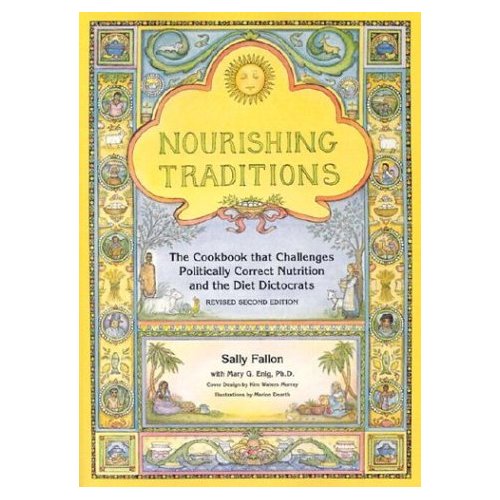
Greenreads: Nourishing Traditions, Sprouted Grains, Deep Nutrition

So our Nourish section of this blog is based on our perspective of healthy eating: real food in it's most natural state (least processed etc.). No, this isn't vegan, paleo, atkins, etc. A lot of it is actually in-line with the Weston A. Price Foundation and this book. This book is great because it explains the pros and cons of foods and why, along with recipes to go along.

There are some great lists of good, better, best type food options to help you decide with sweeteners, which oils, etc. are the best options. They also include what cookware is best to use and why and what ways to cook to preserve the most nutrition. And that's the key: how to maximize nutrition to nourish your body...and not just feed it. White flour and sugar alone will not sustain you. But, everything in moderation also.

This book explains the nutritional content of whole grains, but also explains that ideally they should be soaked or sprouted. Why?  This means the seed isn't ready to bring on new life, so the nutrients are not readily accessible. There is phytic acid which keeps nutrients from producing new life. Once the seeds have been soaked in water, the phytic acid is reduced, so the seed can start to pull out those nutrients needed to grow new life (picture springtime when the rains fall and seeds are ready to grow).  We harvest foods that are living and eat them because they go bad and die, right? And you are what you eat, right? We eat the grains when their nutrients are most readily availble, because they will be nutritional powerhouses for us. And I think when we don't, over time we could develop digestion issues if we are not careful.

Here's another good book that explains the following: seeds, grains, beans, etc. are in a dormant state.
This book also advocates easting probiotic-rich foods. You may think of yogurt with active cultures, but there are so many more options if you're willing to try some other areas of interest. (I'll post on my cultured food adventures later) Other foods along this line are traditional saurkraut and kimchi. Or water or milk kefir. Whey is also pro-biotic rich (this is the liquid you can strain from yogur


You can read more about Weston A. Price and the research he's done on the Foundation's website.
Here's a great article to summarize his findings and provide a good list of foods to eat, foods to avoid, and nutrition myths explained: http://www.westonaprice.org/basics/principles-of-healthy-diets

Here is another book along the same lines, though I haven't read it all yet.

Greenreads: Raising Baby Books

When I was pregnant with my first kid, I got a few library books to learn about how to be more "green." Why?  Well, I was reading about detoxing and the effect of too many chemical and foreign substances on the body, over time. Well, did you know Utah has horrible air and that alone contributes to many respiratory issues, along with many other health issues. (side note)

So here is the first book. And honestly, it's been so long since I read it, but I remember it was a great introduction to making better and more informed choices about products we choose to use and give our babies. Now the great thing about these books is that they give you options and help you think about areas of your homes and about a variety of products and then you can choose how much to detox. You can go full-green eccentric, or just carefully start to implement greener options over time.

I think if I were to reread these again, I'd still have good insights learned to be able to implement, but I'd also feel like been-there-done that for a few areas. IT's a good balance and something you can always improve on. So why not grab one of these, or other options, and just take a glance if you have some spare time. Learn how to be more "green," step by step, because it's a healthier way for yourself and family.

And I think this second one even had a few homemade baby food recipes, which was kind of fun.


8 Facts on Why Not to Leave Your Car Running

There is a blog for Utah Moms for Clean Air. They have facts about how horrible the air is in Utah with all the inversion. It has been so bad this winter!

Here is a site to put in your zip code and see the scorecard of air quality.

Here are some quick facts and tips about why you shouldn't leave your car on:

1. Driving warms the car faster than idling
If your concern is not the health of the car, but simply your own creature comforts, Bob Aldrich of the California Energy Commission points out that “idling is not actually an effective way to warm up a car — it warms up faster if you just drive it.”
The coming electric cars, such as the Nissan Leaf, will incorporate a wonderful feature that allows the owner to use a cellphone to tell the car (which is plugged into the grid) to pre-warm or pre-cool the interior. No idling necessary.

2. Ten seconds is all you need
Environmental Defense Fund, which produced the Idling Gets You Nowhere campaign, advises motorists to turn off their ignition if they’re sitting stopped for more than 10 seconds.
“After about 10 seconds, you waste more money running the engine than restarting it, said Andy Darrell, deputy director of the EDF Energy Program. “Switch the car off at the curb, and you’ll be leaving money in your wallet and protecting the air in your community.”

3. Idling hurts the car
According to the Hinkle Charitable Foundation’s Anti-Idling Primer, idling forces an engine “to operate in a very inefficient and gasoline-rich mode that, over time, can degrade the engine’s performance and reduce mileage.”
The Campaign for an Idle-Free New York City points out that idling causes carbon residues to build up inside the engine, which reduces its efficiency.

4. Idling costs money
Over a year of five minutes of daily idling (which causes incomplete combustion of fuel), the “Anti-Idling Primer” estimates that the operator of a V8-engine car will waste 20 gallons of gasoline, which not only produces 440 pounds of carbon dioxide but costs at least $60.

5. Idling in the garage can kill you
Idling a car in a garage, even with the door open, is dangerous and exposes the driver to carbon monoxide and other noxious gases. If the garage is attached, those fumes can also enter the house.
6. Block heaters beat remote starters
Lori Strothard of the Waterloo Citizens Vehicle Idling Reduction Task Force in Canada says, “Remote starters can too easily cause people to warm up their cars for 5 to 15 minutes, which is generally unnecessary.”
A block heater, which is designed to heat the engine and can cost under $30, on a timer set to start one to two hours before driving, does the trick in very cold climates.

7. Quick errands aren’t quick enough
Natural Resources Canada points out that leaving your car idling while you’re running into a store on an errand or going back into the house to pick up a forgotten item is another way to waste gas and pollute both your town and the planet.
“Leaving your engine running is hard on your pocketbook, produces greenhouse gas emissions, and is an invitation to car thieves,” the agency (PDF) says.

8. Idling is bad for your health (and your neighbor’s health)
According to Minneapolis’ anti-idling ordinance, “Exhaust is hazardous to human health, especially children’s; studies have linked air pollution to increased rates of cancer, heart and lung disease, asthma and allergies.”

Goodreads List 2013

This year we are trying something different. We will post a theme each month. Then you can choose which books to read. Then post a little blurb about which book you read so we can share what we are learning.

January - Spiritual
Pick a spiritual book...maybe this one you can choose to read on Sundays throughout the year, to set-apart Sunday as a day of rest from your other books and busy mindset. Let it be anything uplifting.

February - Recipe Book
Try some new types of recipes. God fing a great recipe book and share with us what it is and some of the recipes you've tried and liked.

March - Classics
Pick a classic. Choose from any of the well-known authors of the past: Jane Austen, Charles Dickens, Stephen Robinson, etc. Try this list of must-read classics.

April - Spy/Action
Warm yourself up this chilly spring month of showers with a good adventure.

May - Hobby/Craft How-to Book
Have you been wanting to learn something? Go check out a book at the library and try to make, build, create something.

June - Book Club Recommendation
Ask your library or neighbor about a favorite book they suggest you read. (You can refer to our Greenreads list for greenread recommendations)

July - Patriotic
Go check out a book about the civil war or revolutionary war era or about the people involved in those times.

August - Sci-fi/Fantasy
Try something new and interesting for your imagination.

September - Biography
Pick someone to learn about. Try a poet or author. What about a past President or ruler?

October - Halloween
Find something in the Halloween spirit; not too dark, but filled with mystery and surprises.

November - Poetry
Go check out some poetry books. Read classics like Emily Dickenson or Robert Frost. Or try humorous ones like Shel Silverstein.

December - Christmas
Go find something in the Christmas spirit with an uplifting message about the true meaning of the Christmas season and giving.

February 7, 2013

Why See a Chiropractor?

We've never really saw or thought we needed to see a chiropractor before, but we started looking into it because we'd heard various accounts of people getting better from random ailments because of a chiropractor. Are you one of the many people who think chiropractors only work with back problems or similar things? OR like me who worried that once you see a chiropractor they're going to try to milk you of your money to get regular visits and make your body dependent on needing to visit them regularly. Or that the art of chiropractic care is "bad," like popping knuckles (supposedly)? Well, it's not. And the pop you hear is just the trapped gas...not bone. They answer to these questions is to figure out what chiropractic care is and maybe try it.

I at one point in time thought all of these things. And I still don't like that appointments cost money and frequently aren't covered by insurance. But...I've been learning a lot about chiroprctic care and learning which things are true and which are silly. IT's amazing how simply understanding the body a little better hasgiven me a greater appreciation for what chiropractors do. If you're not very well versed in the fact that your spine is also where all your nerves pass through, then you're probably sceptical about chiropractors.

My chiropractor considers himself a Dr., who uses chiropractic care to help with the body on a whole. Alinements of the spine are to help correct many problems all over the body, that many times begin with the nerves. He's helped people with allergies and ailments that related to their nervesbeing pinched because their spine was out of alignment. That's actually how it all started. A man helped someone who was deaf from birth get his neck straightened out, and by doing that, the part of his neck that was pinching the nerve going to his ear was no longer a problem and he could hear. Now that's not everyone's problem who was deaf--sometimes it's cause is from other sources, but it was the problem in this situation.

But we've had great sucess with Paul's neck and sinus problems. We've been seeing the chiropractor for the last 5 months.  Paul's neck was way out of whack--three inches forward from where it should be. The x-ray guy at another place said Paul's neck couldn't even scan properly because it was so far forward. (Must be all the computer/laptop work he's done for the last decade...pulling his neck forward). So he's been training his neck forward and getting regular adjustments. And guess what? His sinus problems have been severely minimized these last 3 months. We'll keep you posted on further updates, but so far we're really happy about it and his neck is corrected one inch . Now just two more to go. And we'll see how he fares this summer with his sinus issues. As for me, I'm trying stuff for digestive issues and a weak left ankle--pronation.

Here are two awesome photos about what nerves are related to what parts of the spine. Where do you typically get pain in your back and neck? Look it up on this chart and see if it relates to other symptoms you experience.

My chiropractor does is holistic and performs simple muscle testing to check the basic points of your body's systems for weakness: sinus, emotional, stomach, intestines, thyroid, etc. So sometimes he'll check and tell me my adrenal gland is off and will present some options to fix that underlying problem. He advocates good nutrition as the main problem most people need to start with. Afterall, if you're not putting the right fuel into the vehicle, how can you expect the vehicle to run very long, or well?

And here are some paragraphs I took from my Chiropractor's website that I like: (this isn't an ad for him)

Many people think chiropractic is about bones, especially spinal bones. But the fact is, we're much more interested in nerves. In particular, the nerve messages that travel between the brain and the body and from the body back to the brain.
Any type of disruption can distort or disturb the integrity of the controlling and regulating messages from the brain. The result can be ill health. Because the nervous system controls every cell, tissue, organ and system of your body, chiropractic care can help a wide variety of health problems.
Pain is a symptom. A signal. A sign. Pain is no more a problem than a traffic signal or your alarm clock announcing that it's time to start the day. If there's a problem, it's the meaning we attach to the pain.
When we meet patients who are in pain, besides being compassionate, our first thought is that they must have exceeded some physical, chemical or emotional limit to which they can no longer adapt. So, while we're interested in the pain, we're even more interested in what was the underlying cause of the pain. Plus, what should the patient do to avoid this in the future?
If you know someone who is shopping organically and reducing their dependence upon processed foods, but not getting regularly adjusted, they may be overlooking a key point.
Let's say you go to your favorite supermarket for your weekly shopping. And because you've wisely shopped the perimeter of the store where the fresh foods are, you return home and put things away in your fridge.
But you overlooked one little detail. It's not plugged in! So the fridge has a major subluxation at the electrical outlet.
In the same way your fridge cannot preserve, protect and prolong the vitality of your foods without a properly functioning electrical system, your body cannot properly digest, assimilate and eliminate foods with a subluxation interfering with your digestive system.
So it doesn't matter how healthy your organic food choices are, because your body won't be making the most of those healthy choices.
Your nervous system runs the whole show. If it doesn't work right, you don't work right. And if you're not working right you can't fully benefit from organic food, gym membership and other healthy habits.


Greenreads: The Art of Baking with Natural Yeast

The Art of Baking with Natural Yeast: Breads, Pancakes, Waffles, Cinnamon Rolls and Muffins
This is a fantastic book on learning about making and using natural yeast--sourdough.

It tells you how to make a basic starter. And there is a helpful chart for troubleshooting. They also include how to easily convert regular recipes for sourdough. What I'm really interested in is the use of natural starter, instead of commerical yeast. It looks like the ratio is 1/4 cup sourdough start for every 2 tsp. commercial yeast. (at least for his sourdough start, which is 100% hydration--this means equal parts water to flour ratio.

Anyway, anyone interested in sourdough should get this books. It's only $12 at Costco right now and Caleb Warnock is from Utah...I'm not sure about the other author.

Stay tuned on our nourish recipe blog for recipes with this starter and a Sourdough 101 post if you want to try your own. They make it pretty easy. We've already made pancakes with it.

FYI, my mom got me one of Caleb's other books. It's helpful for thinking of other self-sufficient ways of life, though it's not very in-depth, so you'd have to go do your own further research on particular aspects you're interested in. But it's a great start to thinking about other ways to be more self-sufficient.

Event Notes: Real Food - Food Storage Notes

KerryAnn, from cooking traditional foods, had a food storage webinar I listened to about how to store real food that you eat regularly....now this is based on a real food diet (not processed foods). She's gone through two years of food supplies due to job loss and has experienced many week long power outages. She also has been cooking with real food for many years.

Here is an outline of her recommendations for real food storage.

First she said the rule of three (have three ways to do/get each of the following things):
1. Cook (oven/stove, Dutch oven, grill, etc.)
2. Heat and cool
3. Water
4. Clean (self, clothes, dishes, bathroom, etc.)

Then she gave per person serving recommendations for food storage you regularly rotate (real foods/whole grains...this isn't for people who want to eat lots of processed stuff) which are surprisingly similar the lds food storage calculator:
Grains- 200-300 lbs/adult male (freeze bulk grains for 72 hrs before placing in buckets with oxygen packs...to kill bugs. Though lds.)
Water- 1 gallon a day/person (including cooking and hygiene needs)
Legumes/beans- 80-90 lbs/adult male per year (freeze 72 hrs prior to placing bulk in buckets)
Fruit- 1-2 servings per day/person
Veggies- 2-4 servings per day/person
Fats- 14-16 qts/person (freeze animal fats and include variety: coconut oil, butter, lard, etc.)
Salt- 8-10 lbs/person (use real salt, not refined white salt)
Sweeteners- 35lbs/person (honey, maple, Rapudura...variety is good)
Meat- 400 lbs/person
Dairy- waxed cheeses are great to store.
Eggs- best to have chickens if possible, but if not your can use chia or flax seeds as baking alternatives.

Then she touched on other items: (but I was more interested in hearing this real food twist on food storage for this particular post)
Condiments -- fermented mayo, ketchup, sauerkraut, etc.
Toiletries
Seeds (to plant or sprout...depending on season)
Extra clothes
First aid
Other gear, etc.

I will be posting a more in-depth Food Storage 101 handout later. These are just my notes from this event.

Funtastic Friday: Shelf Liners to Jewelry Organizers...

So, I've been pinning ways to organize jewelry on Pinterest for quite some time now...always thinking, "I'll get to organizing my jewel, that's crammed in a tiny jewelry box, someday."

Well, that someday has come! I found some cute shelf liner paper at the dollar store and thought I'd try it out in my kitchen. It was perfect and cute, so I bought a big thing of it at the local grocery store and redid my kitchen drawers, shelves, pantry, etc.


  I also did a wood-looking swatch under the sink, which looks great, I think.

Then I got paper-happy and put it all over my old ugly white dresser Paul doesn't like. He did say this was a step up (but I'm sure he'd rather see it go).

But, doing the kitchen shelves made me pull out the old shelf liner stuff we had in there before that is somewhat foamy and not adhesive at all. It moved around a ton. So I up cycled! Talk about inspiration. It reminded me of lace, and I had pinned a laced background in a frame for hanging earrings.

And voila, after reusing an old frame I had laying around and stapling the old dollar store foam shelf liner on the back, I now have a great way to see all my earrings. And talk about a sceptic...my husband thought I was so weird being a frugal junkie. But now he actually thinks it turned out nice and he doesn't mind looking at it...which is huge!

Now I just need to figure out how to hang my necklaces, bracelets and headbands. :)

P.s. the sticky shelf liner paper doesn't stick to chipboard stuff...but it sticks great to the shelves and is super easy to peel off and put back if placed down wrong.

Funtastic Friday: Homemade Cleaning (part 1)

So, I have officially decided to do projects on Fridays. And who really can do a whole lot of projects with two or more kids to take care of, right? But...where there's a will, there's a way. So I created a Pinterest board with various things I want to do this year. And those are what my Fridays are for. The key is doing things together with others. Our kids play together and we attempt to do a project. Sme projects may be split into multiple parts. Some Fridays we may have to cancel or be ok not getting anything accomplished, but hey...we shoot for the moon and at least land among stars, eh?


So I've made some more reusable snack bags with my sister for one Friday and some flowers awhile back with her too.


But my first official one was attempting air fresheners with Rachel.

Equipped with various jars, we made a scented baking soda powder in a jar with paper topper we poked pin holes through. I used vanilla in mine and sprinkled it n the carpet. smells heavenly!

Then we made citrus infused vinegar in jars for scented vinegar to clean with. I continue to just stuff my orange peels in there whenever i eat another. it will just keep infusing as it sits over time.

We also made gelatin filled jars with essential oils in them. I don't think they add much to the air's scent though. We'll have to see about this one.

I will leave comments on each pin we've done about their success and failure.  This is the fun part about these Fridays...we have fun trying crafts and new adventures, fully understanding that some may not work out and that there are no set rules to these activities. But we have fun.

Stay tuned for our next adventures...DIY wood blocks for kids.

January 31, 2013

Cavities Can Heal? Heal Thy Mouth Summit Notes

I listened in last week on lots of speakers from various industries and backgrounds talking about Oral health in a summit OraWellness put on online. I learned a ton of great info. I've been looking into a more holistic dental approach, but haven't  gotten very far because the only one close doesn't take insurance. But after hearing the great talks about nutrition and staying away from a lot of the chemicals and things that are in use in dentistry nowadays, I'm definitely going to do some things differently.

Here are my notes, though you won't get much out of them...at least not as much as me. I do know that I for sure am going to eat a lot more from scratch broth soups and stuff for the high minerals and vitamins they contain that aid in the health of teeth. And cutting out sugar to a large degree is a big one. But even just brushing within ten minutes of eating is huge. S many people talked about helping their teeth simply by doing those things and taking cod liver oil supplement, which is super high in vitamin D--which you can only get from the sun or supplement otherwise (besides bone broths).

Good nutrition: fresh foods, cultured/fermented foods (for probiotics: like real unpasteured saurkraut or kimchi), organ/bone meats, etc.

Sugars have 6 carbons and feed bad bacteria, but xylitol (a natural sweetener) doesn't because it's a 5carbon molecule (though I heard it may be hard on your system somehow...will have to research this one).

The health of the tongue and mouth are linked to that of the body. Both are maps, like reflexology.

Cavities aren't permanent damages, but rather like a broken arm...which can heal. Eating good foods and limiting sugar is a great start, but teeth need vitamin A and D--can take cod liver oil as a Supplement.

Fluoride is toxic. Our bodies don't need it. Whatever we put into our mouth goes into our whole body, so try to use a holistic dentist with minimal fluoride.

We don't need X-rays each year and really should limit them to 2-3 years if needed at all.

Toothpaste: 1part salt to 3parts baking soda. Add colloidal silver or hydrogen peroxide to make it a paste. Or can add Redmond clay. Use essential oils and xylitol to flavor and sweeten it.

Mouth wash: like antibacterial hand soap and antibiotics and pasteurization...kills everything good and bad.